Introduction
Over the last decade, the jewelry industry has experienced a quiet revolution. Sparkling on red carpets, glittering in engagement rings, and now adorning delicate chains across the necks of fashion-conscious shoppers, lab grown diamond necklaces are no longer a niche choice—they’re a mainstream luxury. As consumers become more environmentally aware and technologically curious, lab made diamonds have emerged as a symbol of innovation, ethics, and value.
Far from being “fake” or “synthetic” in the cheap sense, these gems are chemically, physically, and optically identical to diamonds mined from the earth. What’s different is their origin: rather than forming over billions of years deep under the crust, they’re created in a lab using advanced technology that replicates the natural diamond-growing process.
This shift is not just about technology—it’s about style, sustainability, and the democratization of fine jewelry.
What Exactly Are Lab Grown Diamonds?
To understand why they’re making waves, it’s important to know what they are. Lab grown diamonds, also referred to as man-made, engineered, or cultured diamonds, are formed using one of two primary methods:
High Pressure High Temperature (HPHT)
Mimics the extreme heat and pressure conditions under which natural diamonds form.
Chemical Vapor Deposition (CVD)
Involves a carbon-rich gas that deposits layers of carbon atoms onto a diamond seed, growing the gem layer by layer.
The end result? A diamond with the same atomic structure as a mined one. Even professional gemologists require advanced tools to tell them apart.
When used in necklaces, these diamonds can be cut, polished, and set just like any mined gem—whether in a solitaire pendant, a halo design, or a more complex multi-stone setting.
Why Consumers Are Choosing Lab Grown Diamond Necklaces
Ethical Appeal
Traditional diamond mining has long been associated with environmental impact and human rights concerns. Although the industry has made strides toward responsible sourcing, many buyers feel more comfortable knowing their diamond was grown without the risk of contributing to unethical mining practices.
Lab grown diamonds are conflict-free by design, making them a popular choice for socially conscious consumers.
Environmental Benefits
Mining displaces massive amounts of earth, consumes water, and can disrupt ecosystems. While producing diamonds in a lab still requires energy, the overall ecological footprint can be significantly smaller—especially when renewable energy sources are used.
Some jewelers even highlight their carbon-neutral production processes, making lab grown diamond necklaces a green style statement.
Cost Advantage
One of the most compelling reasons for the surge in popularity is price. On average, lab made diamonds cost 30–40% less than mined diamonds of comparable size and quality. This means buyers can opt for a larger stone or a more elaborate necklace design without exceeding their budget.
A Brief History of Lab Made Diamonds in Jewelry
While the first lab grown diamonds appeared in the 1950s, they were initially used for industrial purposes—cutting tools, drilling bits, and abrasives. It wasn’t until the early 2000s that technology advanced enough to produce gem-quality stones suitable for fine jewelry.
By the mid-2010s, the market had matured, and jewelers began offering them alongside mined diamonds. The turning point came when major retailers embraced the trend, and celebrities began wearing lab made diamond pieces at high-profile events. Today, from minimalist pendants to intricate statement necklaces, they’ve become a staple in modern jewelry collections.
Design Trends in Lab Grown Diamond Necklaces
Minimalist Solitaires
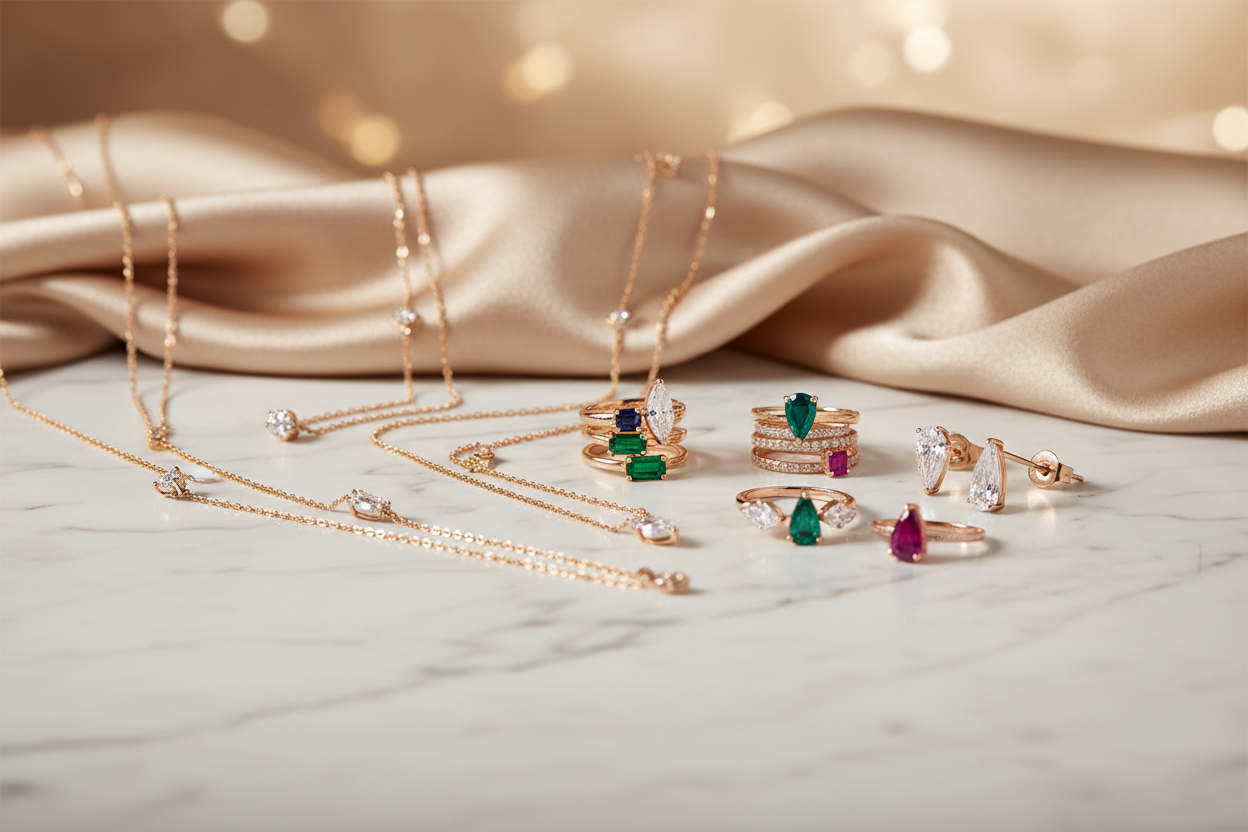
The classic single-diamond pendant remains a timeless choice. A round, princess, or pear-shaped lab grown diamond on a fine gold or platinum chain can be worn daily or layered with other pieces.
Halo and Cluster Designs
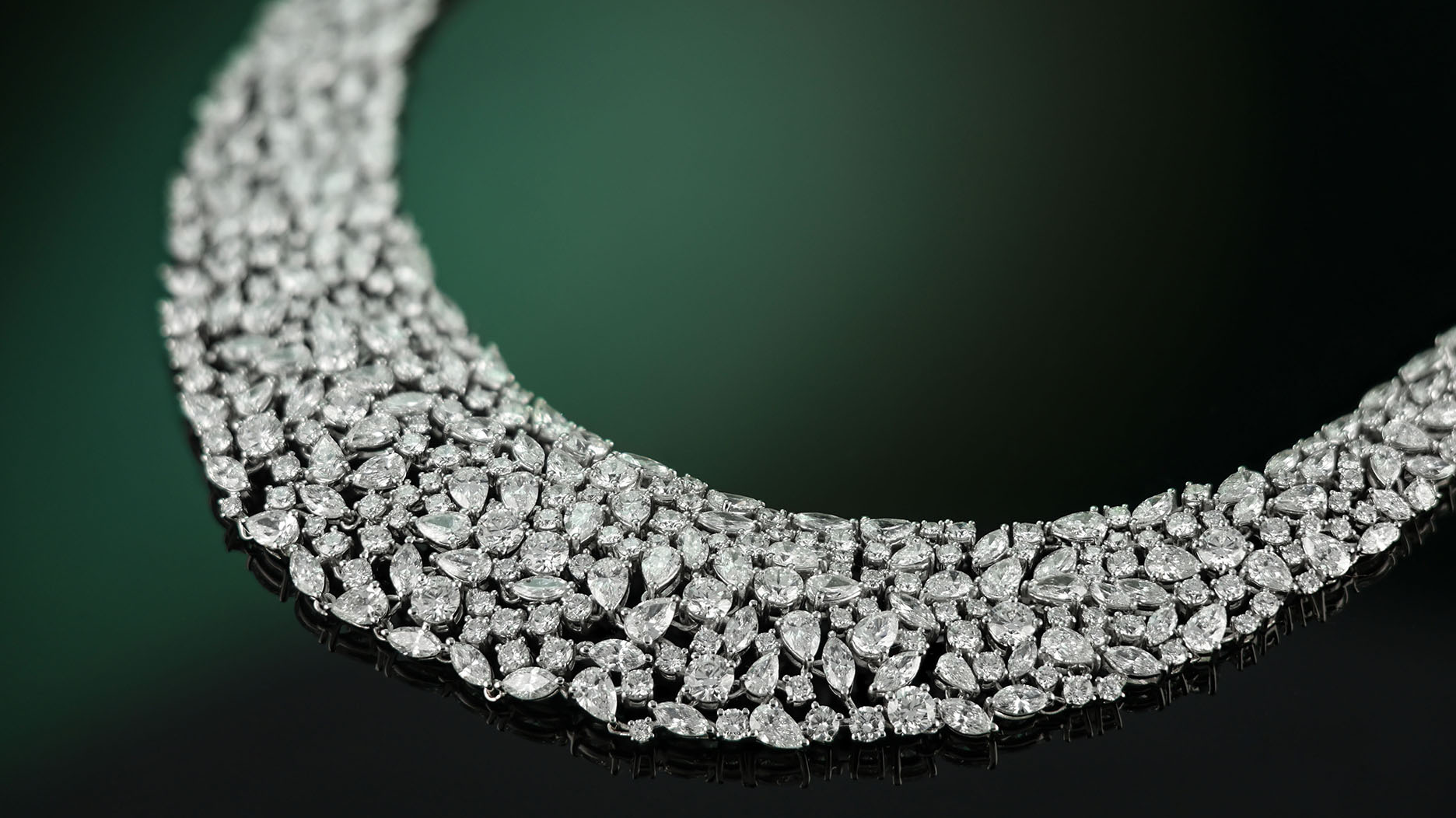
Surrounding the central diamond with smaller stones creates a larger visual impact without significantly increasing cost. With lab grown stones, jewelers can experiment with bolder designs while maintaining affordability.
Colored Lab Diamonds
Not all diamonds are clear. In a lab, it’s possible to produce fancy-colored diamonds—soft pinks, blues, or yellows—more predictably and at lower costs than their natural counterparts. These add a distinctive twist to traditional necklace designs.
Vintage Revival
Art Deco-inspired settings, floral motifs, and intricate metalwork are making a comeback. The lower cost of lab made diamonds allows artisans to focus on craftsmanship and creativity without the pressure of using the smallest possible stones to manage expenses.
How to Choose a Lab Grown Diamond Necklace
When shopping for any diamond—lab grown or mined—the same criteria apply: the Four Cs.
Cut
Influences sparkle more than any other factor.
Color
Graded from D (colorless) to Z (light yellow or brown).
Clarity
Measures inclusions or blemishes.
Carat
Refers to weight, not size, but affects the stone’s visual presence.
For necklaces, cut and color often take priority since the stone will be viewed from a short distance. Many buyers opt for slightly lower clarity to maximize size or design complexity.
Myths and Misconceptions
“They’re Fake”
This is perhaps the most persistent myth. Lab grown diamonds are not imitations like cubic zirconia or moissanite—they’re real diamonds. The only difference is origin.
“They Don’t Hold Value”
While resale prices for lab grown diamonds may be lower than for mined ones, most people don’t purchase jewelry as an investment but as a personal or sentimental acquisition. The savings on the initial purchase often outweigh concerns about future resale.
“They Look Different”
To the naked eye, there’s no difference. In fact, some lab grown diamonds are of higher quality than mined stones because their creation process can be carefully controlled.
The Future of Diamond Jewelry
As technology advances, production costs will likely continue to decrease, making larger and more intricate designs accessible to more buyers. We may also see even more customization options—imagine ordering a necklace with a diamond grown specifically for you, in the exact shape, size, and color you desire.
Sustainability is also expected to play a bigger role. Some forward-thinking jewelers are pairing lab grown diamonds with recycled metals, creating pieces that are beautiful in both form and philosophy.
Conclusion
The rise of lab grown diamond necklaces represents more than a shift in jewelry trends—it’s part of a broader cultural movement toward conscious consumerism, technological innovation, and personal expression. Lab made diamonds offer beauty without compromise: the same sparkle and durability as mined stones, but with added ethical, environmental, and financial benefits.
Whether you’re drawn to the elegance of a simple solitaire, the confidence of a halo design, or the charm of a vintage-inspired piece, lab grown diamonds offer a world of possibilities. In a market once defined by tradition, they’re proving that sometimes the most brilliant choice is also the most forward-thinking.